

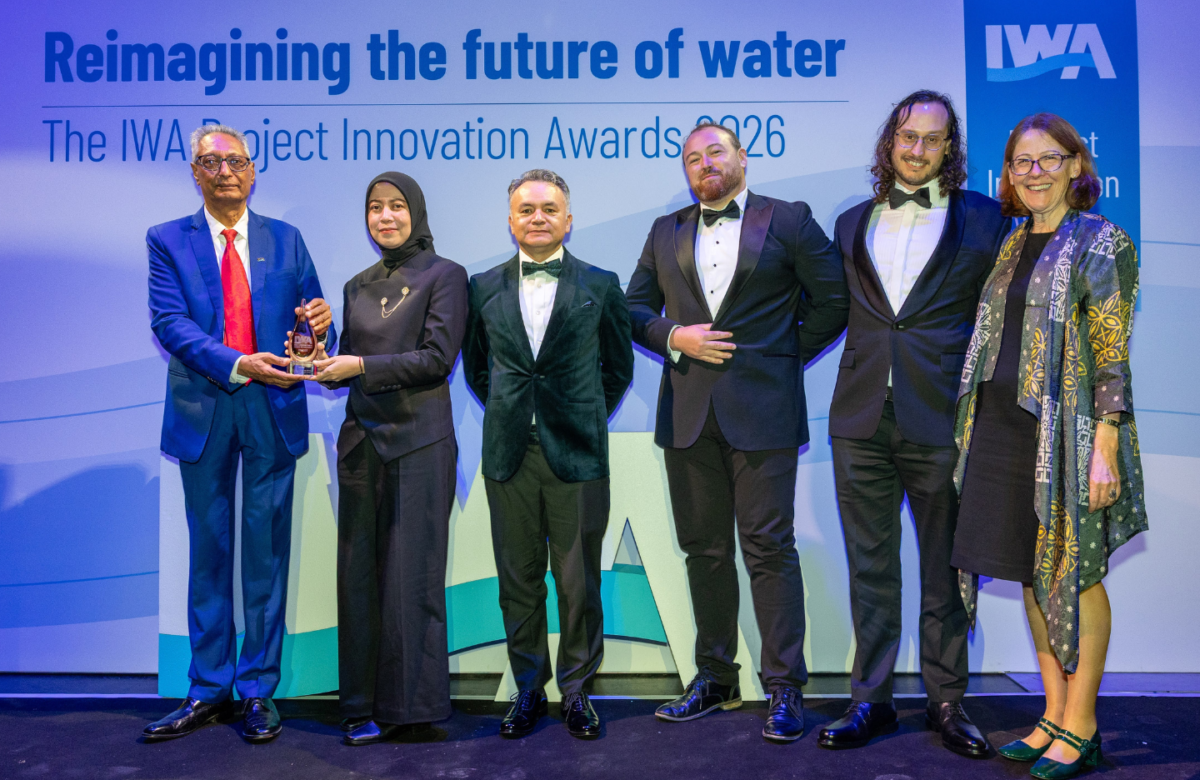
An Indonesia–Australia research collaboration exploring greenhouse gas emissions from Indonesia’s sanitation systems has received a Bronze Award at the 2026 IWA Project Innovation Awards in Glasgow, United Kingdom, in the Breakthroughs in Research and Development category at the 2026 in Glasgow, United Kingdom.
When we think about climate change, we often picture smoke rising from factories, exhaust fumes from vehicles, or forests being cleared. But there is another source of greenhouse gas emissions that rarely enters the conversation: sanitation. These systems are essential to public health and, ultimately, impact environmental protection. Yet, depending on how they operate, they can also release greenhouse gases into the atmosphere.
So, how much do Indonesia’s sanitation systems contribute to greenhouse gas emissions? And how can we measure those emissions more accurately?
These are the questions at the heart of Emissions Measurement to Improve Sanitation in Indonesia (EMISI), a research initiative that has recently received international recognition.

Rethinking Sanitation Research
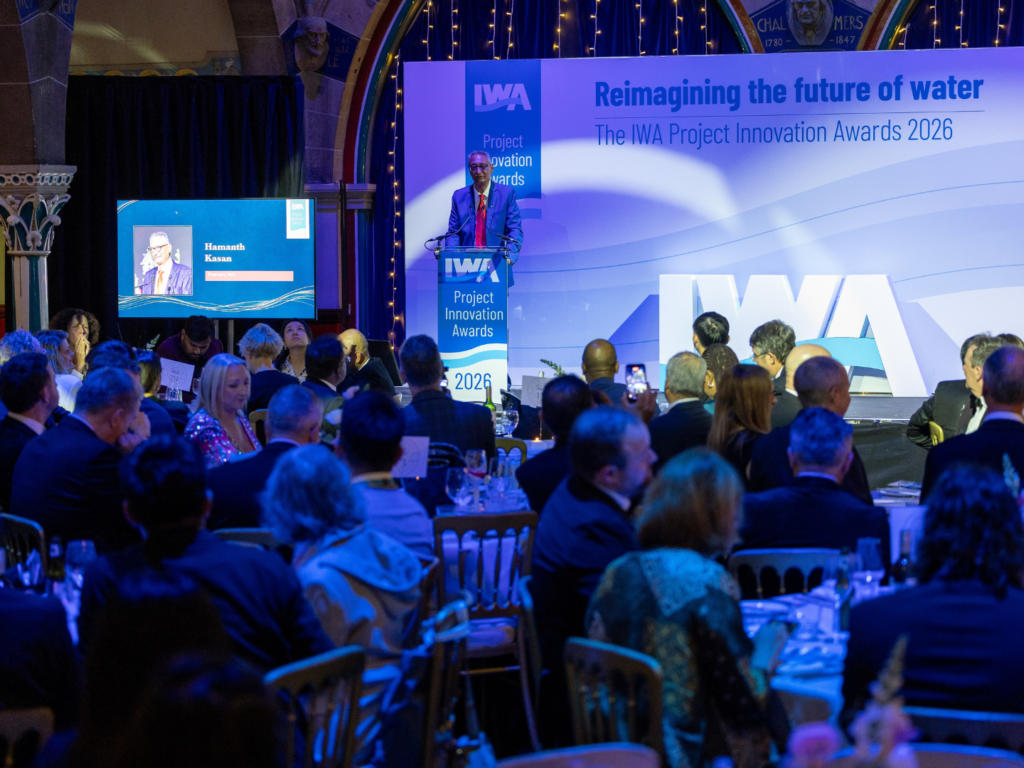
The 2026 edition of IWA Project Innovation Awards, held on 6 October and attracted 320 entries from 65 countries, with projects assessed by an independent panel of experts.
The award recognised EMISI’s innovative approach to understanding greenhouse gas emissions from sanitation systems in Indonesia—an area that has received relatively little attention in discussions about climate change.
Led by the University of Technology Sydney’s Institute for Sustainable Futures (UTS-ISF), EMISI is an initiative of Indonesia’s Ministry of Public Works, supported by the Australian Government through the Indonesia-Australia Infrastructure Partnership (KIAT).
Running from 2024 to 2026, the project brings together researchers from Universitas Indonesia (UI), the Centre for Regulation, Policy and Governance (CRPG), the University of Leeds, and the University of New South Wales (UNSW).
The research looks at greenhouse gas emissions across the sanitation service chain—from household systems such as septic tanks to sewerage networks and centralized wastewater treatment plants.
Why does this matter? Because treating and managing wastewater can release gases such as methane (CH₄) and nitrous oxide (N₂O), both of which contribute to climate change. However, the amount released can vary depending on the type of sanitation system and how it operates.
Measuring What Often Goes Unnoticed
The research covers both on-site systems, such as septic tanks, and centralized wastewater treatment systems. To do this, the team developed a measurement device called a flux chamber – built by the research team, which is used alongside a gas analyzer. In simple terms, the equipment helps researchers capture and measure gases released from sanitation facilities, providing information about actual emissions in the field.
Direct measurements offer additional evidence that can make those estimates more representative of conditions in Indonesia. The findings reveal that emissions vary across sanitation systems and treatment processes. For example, the reported median methane emission from on-site sanitation systems was 2.9 grams of CH₄ per person per day. Meanwhile, nitrous oxide emissions from aerobic processes in centralised wastewater treatment systems ranged from 7.5 to 144 grams of N₂O-N per person per year.
These figures help illustrate why looking at sanitation as a single, uniform source of emissions can be misleading. Different systems and processes can produce different amounts of greenhouse gases.
Turning Research into Better Sanitation Planning
This field data can complement existing datasets and emission factors used in Indonesia’s national greenhouse gas inventories, including government inventories. A clearer picture of emissions can help identify where they come from and provide a stronger basis for decisions about sanitation infrastructure and services. In the long run, the findings are expected to support the Indonesian government in improving emissions data, strengthening sanitation management, and incorporating greenhouse gas considerations into sanitation planning and policy.
Universitas Indonesia, through the CEST team, has been part of this collaboration, contributing to the research, field data collection and analysis, and the development of knowledge about emissions from the sanitation sector. The Bronze Award is a meaningful recognition of the work carried out by this cross-institutional and international team. More importantly, it highlights an issue that deserves a bigger place in conversations about climate action.
A thank you to Ibu Nopa Dwi Maudiliany for representing the team at the event.
 English
 Bahasa Indonesia
