

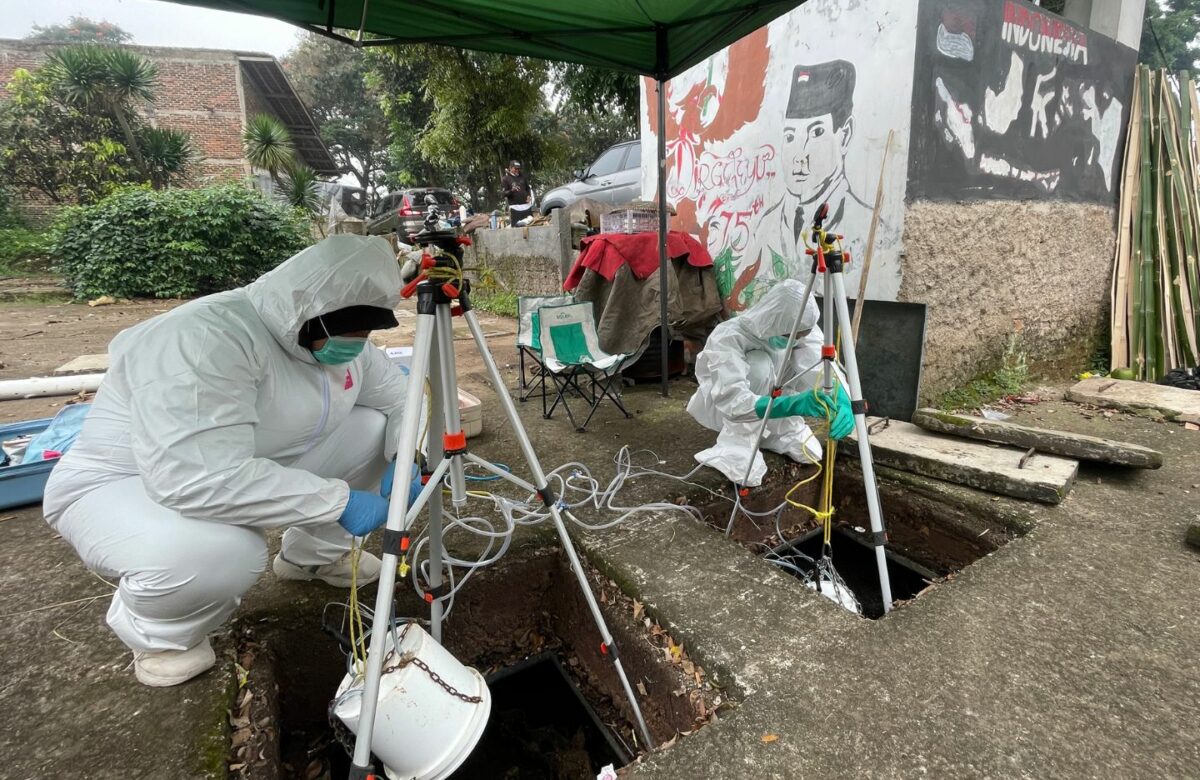
Indonesia is committed to achieving safely managed sanitation while reducing greenhouse gas emissions as part of its climate commitments. Yet, until recently, there was limited evidence on how much methane and other greenhouse gases are emitted from the country’s diverse sanitation systems, particularly from the on-site sanitation systems used by most Indonesian households. The Emissions Measurement to Improve Sanitation in Indonesia (EMISI) Project was established to address this knowledge gap by generating the first comprehensive national dataset on sanitation-related greenhouse gas emissions. Led by the University of Technology Sydney (UTS) in collaboration with Universitas Indonesia (UI), the Centre for Regulation, Policy and Governance (CRPG), the University of Leeds, consulting with the University of New South Wales (UNSW) and Institute of Technology Bandung (ITB), and supported through the Indonesia-Australia Partnership for Infrastructure (KIAT), the project provides the scientific evidence needed to improve sanitation services while contributing to climate change mitigation.
Collecting reliable emissions data requires more than advanced scientific instruments. It demands standardized methods that ensure every measurement is accurate, consistent, and conducted safely, regardless of location or field conditions. Researchers work in environments that may involve biological hazards, confined spaces, and exposure to potentially harmful gases. As a result, rigorous health, safety, and environmental practices are essential to protect both personnel and the integrity of the data.
This Standard Operating Procedure (SOP) video presents the field methodology used by the EMISI Project to measure greenhouse gas emissions from on-site and small-scale sewered sanitation systems. It demonstrates each stage of the process, beginning with field preparation, site assessment, and the use of personal protective equipment, followed by gas measurements using flux chambers and gas analyzers, sampling of sludge and liquid, equipment decontamination, waste management, and post-field safety procedures.
By following these standardized protocols, every field team can generate high-quality scientific data while minimizing risks to researchers, communities, and the environment. Together, these procedures support Indonesia’s efforts to better understand sanitation emissions, strengthen evidence-based policymaking, and build a more sustainable and climate-resilient sanitation sector.
 English
  Bahasa Indonesia