

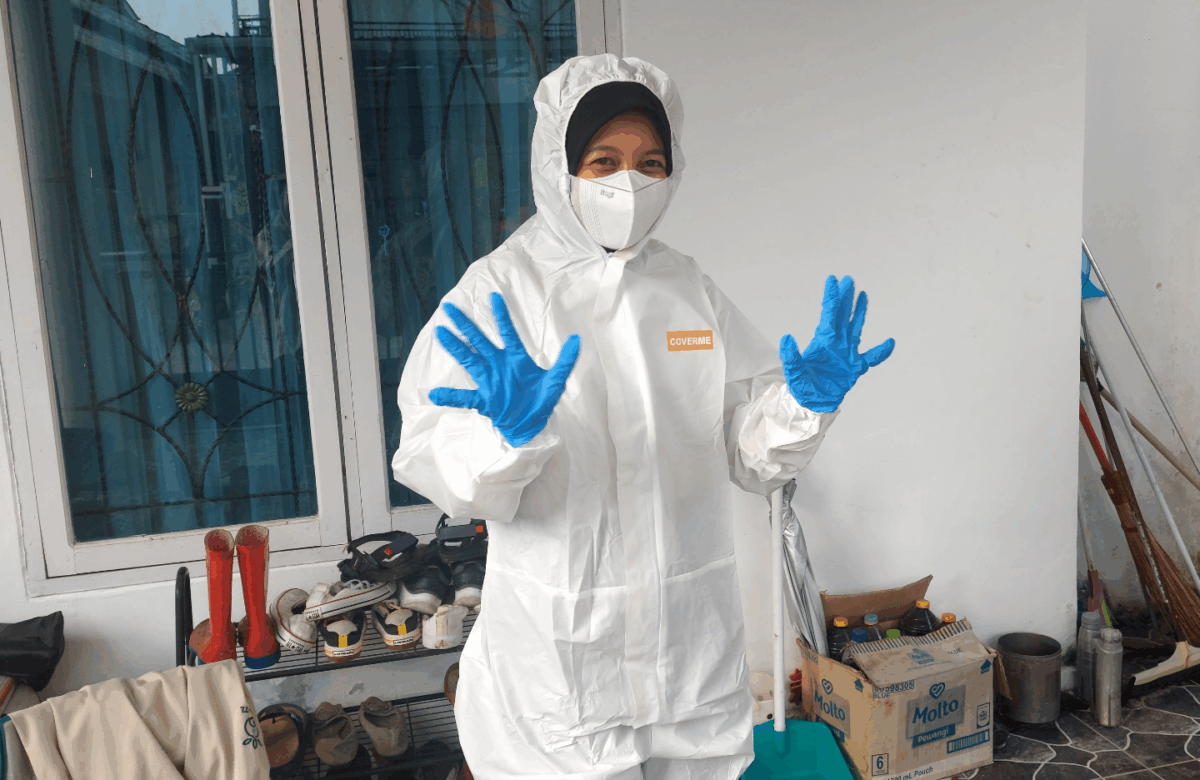
It was the only time I was able to use my PMS as a legit reason to be mad in a forum.
The meeting felt like a secret club- like Fight Club, but online. I know that sounds weird, but I can’t describe the feeling any closer when the host asked me to activate my camera upon entering the Zoom room. They needed to verify that I was a woman. Once confirmed, I was in.
But in what, exactly?
It was an online forum titled The Unseen Ladies of Conservation by Species Obscura. Unlike other closed forum that required recommendations to join, I signed up simply because I knew one of the speakers; Umilaela Arifin, an old friend of mine and now one of the very few Indonesian herpetologist. Truth be told, I didn’t care much of what they were going to talk about. I was just a fan of hers and her niche science. I still am. And it was fun to get to know Diny and her soft yet feisty personality as a researcher.
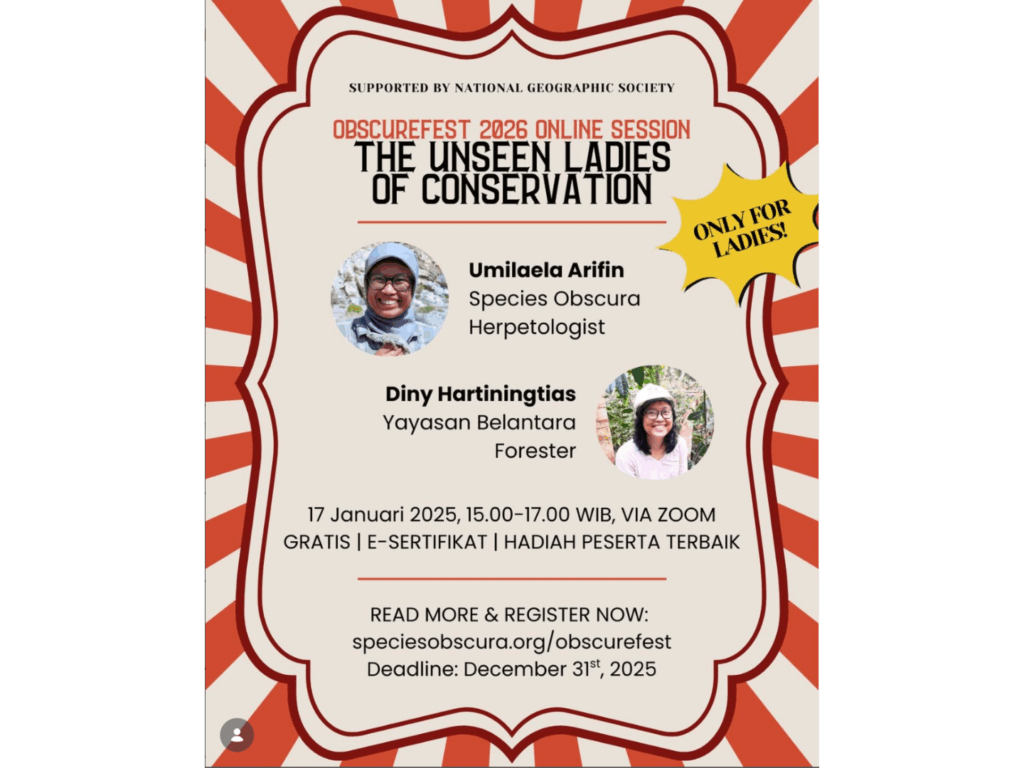
Sitting in through the introduction, it became clear that protocols were necessary to create a safe space. Apparently, the forum was to talk about challenges women faced during field work. The obvious, not obvious, question then came up.
During a long period field trip, where should a women dispose of her used menstrual pad?
A simple question, and yet something that had never occurred to me. I’ve had my fair share of fieldwork but rarely spent months in the far remote locations, as did the speakers. While pads and tampons might be possible for temporary disposal until one meets a waste disposal system, what of those that use menstrual cups? Are hygiene facilities accommodating in remote locations? Are remote stations equipped with safe restrooms for women?
Some scientists refer to birth control pills to regulate, or deregulate, their periods during fieldwork. But, is science worth deregulating your hormonal system to cope with logistical limitations?
When it comes down to it, is field work ever prepared for women, even in 2026? With emerging women in STEM, why hasn’t fieldwork been designed to incorporate women’s needs?
Data from BPS (Statistics Indonesia) in 2024 have stated that there are about 30 percent of women in STEM workforce (source). While women fill in a considerable chunk in STEM, there I was in a forum still exposing that we are far from accommodating our needs. It has been a while since Jane Goodall dedicated her life in the jungle for the primates, are we even close?
In the heat of the discussion, and feeling I could verbally express the effects of PMS frustrations, I found myself wondering in the forum whether the discussion should be open to men. Not surprised, the forum responded with warm laughs validating my hormones. An all-female forum gets it.
So, how are we to change the narrative if men are not involved? How do we ask what we need in the field?
The strongest answer was very simple: Just ask!
It sounds obvious, but the speakers expressed how the answer isn’t as simple as expected. It’s still taboo talking about period and female necessities in larger professional forums, especially in Indonesia. However, if avoided, it will still remain unresolved. Although men were not present in this closed forum, talking about it amongst women is still a great effort to get more women on the same page.
In a separate discussion within CEST, majority of women but in present of men, the simple gesture of ‘asking’ is the right starting point. Many men, especially in Indonesia, might not fully understand what women need, let alone provide it before any project. Not because they are unwilling to help, but because the it’s rarely an open conversation. Touché! Fieldwork should be more than just logistics, they should also include safe bathrooms, secure accommodation, clear protection policies, and supporting environment from family and colleagues.
Speaking before thinking, I realized I hadn’t considered the discussion was kept closed because it exposes uncomfortable realities. An unprepared forum might impact recruitment of women as field scientist as it might be perceived as inconvenient. However, if women can take on critical roles in research, shouldn’t projects already have standards to support them? And wouldn’t standards start from healthy discussions?
I know this wasn’t the first time women talked about these issues, but it feels like we’re nowhere close in creating noise about it. Or maybe, I might just not been in the right circles. You tell me.
Speaking for the right circles, I highly appreciate Species Obscura for their courage to create a discussion and safe space for women. This was an important discussion. Still, the angry woman in me think this discussion should take place more often and, more importantly, involve men. Because, particularly in Indonesia, men majority still lead project designs and are decision makers. If they are not part of the discussion, how can we all find a solution?
 Bahasa Indonesia
  English