

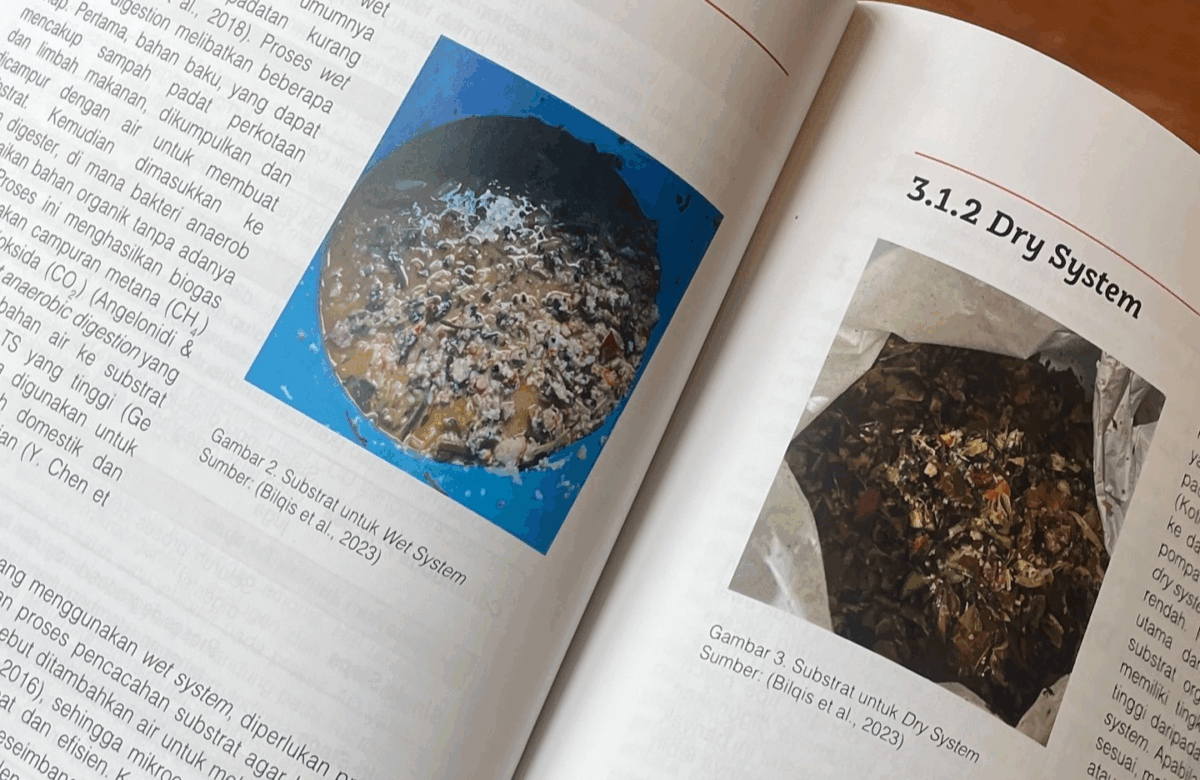
Published! “Proses Pengolahan Limbah Organik dengan Anaerobic Digestion” by UI Publishing. This book aims to provide comprehensive insights into anaerobic digestion for students and researchers, including a wide range of audiences. This anaerobic digestion book explains the scientific principles behind anaerobic digestion technology and presents research conducted at various scales. In addition, it highlights best practices supported by extensive scientific evidence.
The book is intended to serve as both a reference and a practical guide for implementing organic waste treatment using anaerobic digestion, including for waste-to-energy implementation. It is also a valuable resource for academics and students seeking to expand research and development in biogas technology in Indonesia.
What is anaerobic digestion?
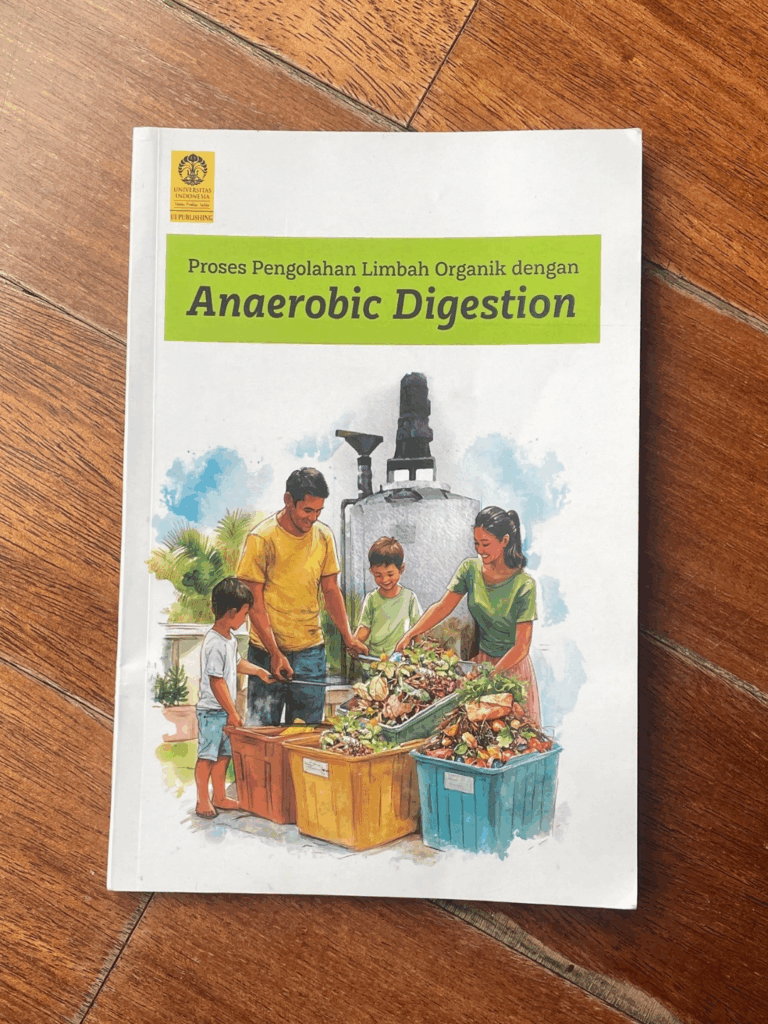
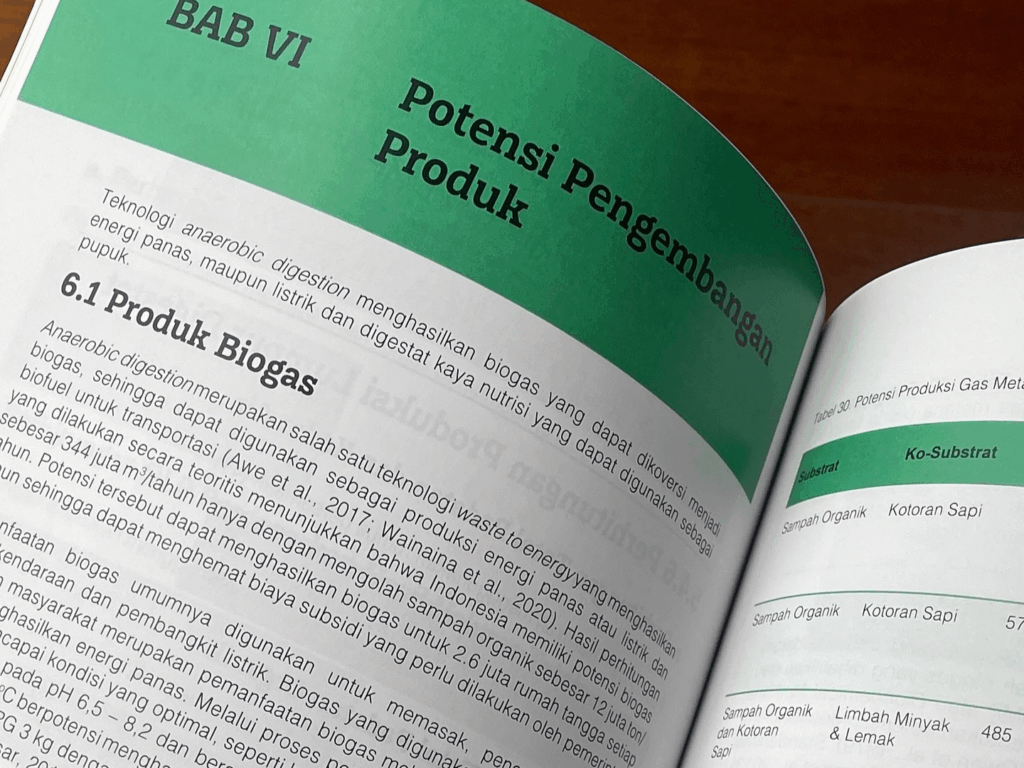
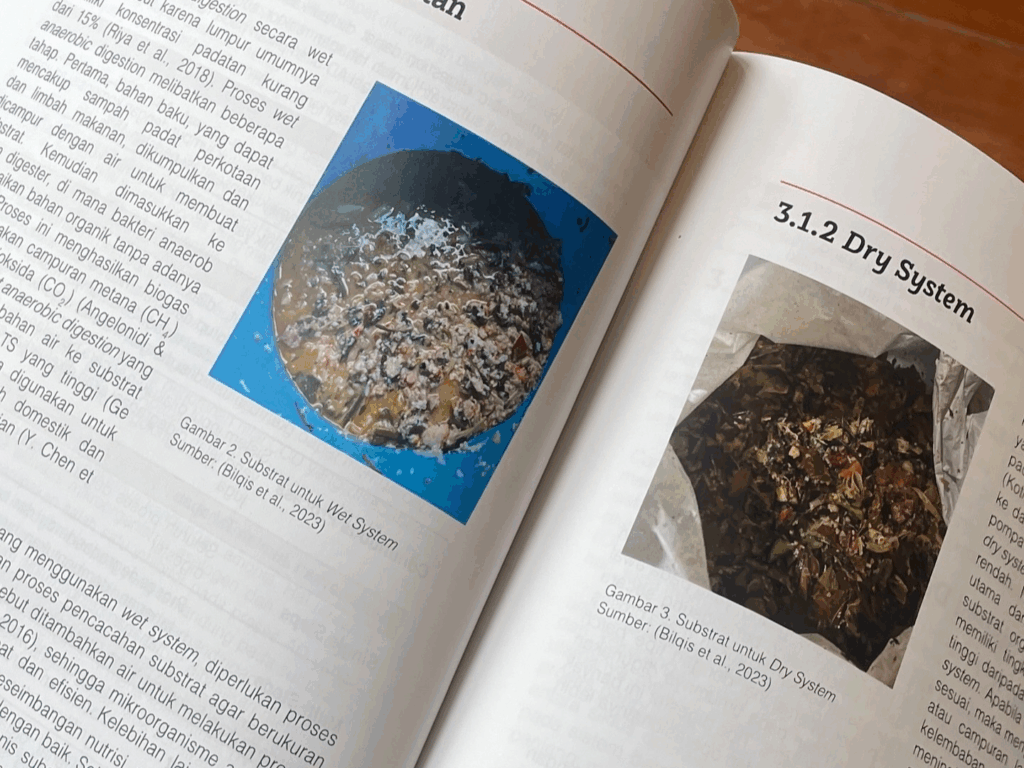
Anaerobic digestion (AD) is a biological process in which microorganisms break down organic matter in the absence of oxygen, producing methane (CH₄), carbon dioxide (CO₂), and nutrient-rich digestate. This process has strong potential for managing urban organic waste, which consists of both solid and liquid materials rich in biodegradable content. In Indonesia, the volume of organic waste continues to rise alongside population growth and urbanization. As of 2015, the country generated approximately 64 million tons of waste annually, with around 64% classified as organic. While composting is widely practiced, a significant portion of this waste still ends up in landfills, where it decomposes anaerobically and releases greenhouse gases that contribute to climate change.
Fecal sludge management is another pressing issue, as many treatment facilities are non-operational despite the high organic content of sludge that could be converted into biogas through AD. The technology offers dual benefits: producing renewable energy in the form of biogas and generating digestate that can be used as organic fertilizer, reducing dependence on fossil fuels and synthetic inputs.
Several initiatives demonstrate AD’s practical application. A biogas reactor (TORBI) installed at a pesantren in Depok processes organic waste into biogas for cooking and digestate, while a collaboration between Universitas Indonesia and PT Paiton Energy has successfully generated electricity (234 kWh) and fertilizers using AD technology.
Despite these successes, AD remains underutilized, particularly for urban waste management. Its use is still largely confined to livestock waste treatment. Expanding AD adoption requires increased awareness, along with stronger policy support, investment, and education. In the long term, wider implementation of AD could significantly reduce landfill dependency, lower emissions, and support sustainable energy and agriculture in Indonesia.
This book was developed with members of the Civil and Environmental Engineering Department of University of Indonesia.
Author Team
Authors and Editors:
Dr. Cindy Rianti Priadi, S.T., M.Sc.
Prof. Dr. Ir. Setyo Sarwanto Moersidik, DEA
Dr. R.M. Sandyanto Adityosulindro, S.T., M.T., M.Sc.
Ir. Gabriel Soedarmini Boedi Andari, M.Eng., Ph.D.
Dr. Nyoman Suwartha, S.T., M.T., M.Agr.
Nopa Dwi Maulidiany, S.T., M.T., Ph.D.
Ayik Abdillah, S.T., M.T., M.Sc.
Septiana Kurnianingsih, S.T.
Carissa Eukairin Purnomo, S.T.
Adelia Tsaltsani Bilqis, S.T.
Inas Imtiyaz, S.T.., M.T.
Danisha, S.T.
Kautsar Muhammad Iqbal, S.T.
Supervisor:
Dr.Eng Baskoro Lokahita, S.T., M.Eng
Muhammad Irpan Sejati Tassakka, S.T., M.T
Immanuel Teja Harjaya, S.T., M.T
Graphic Designer
Arif | xide apix studio
Suggested quote:
Priadi, C. R., Moersidik, S. S., Adityosulindro, R. M. S., Andari, G. S. B., Suwartha, N., Maulidiany, N. D., Abdillah, A., Kurnianingsih, S., Purnomo, C. E., Bilqis, A. T., Imtiyaz, I., Danisha, & Iqbal, K. M. (2025).
Proses Pengolahan Limbah Organik dengan Anaerobic Digestion (Arif, Ed.). UI Publishing.
 Bahasa Indonesia
  English