

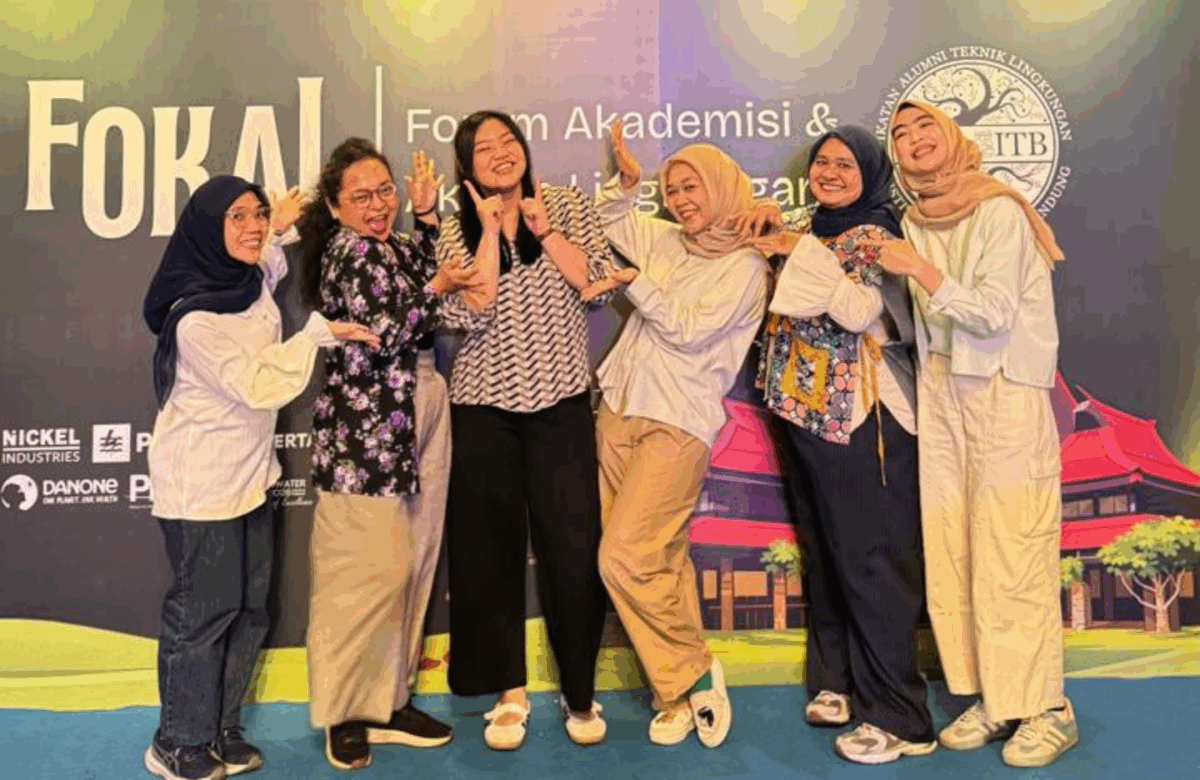
“One example is sachet waste. The products we consume often come in packaging that takes an extremely long time to decompose. When I think about the plastic wrappers from the snacks or instant noodles I had for the first time, they’re probably still out there, not fully broken down. Yet, even with that awareness, I still consume snacks and instant noodles today,” said Karin Aulia, Accounting and Tax Officer at CEST.
There is nothing inherently wrong with this statement—it reflects a reality shared by many people in Indonesia, and even globally. The use of single-use packaging has become normalized in this fossil fuel–dependent generation. However, not everyone is fully aware of the environmental consequences of such consumption.
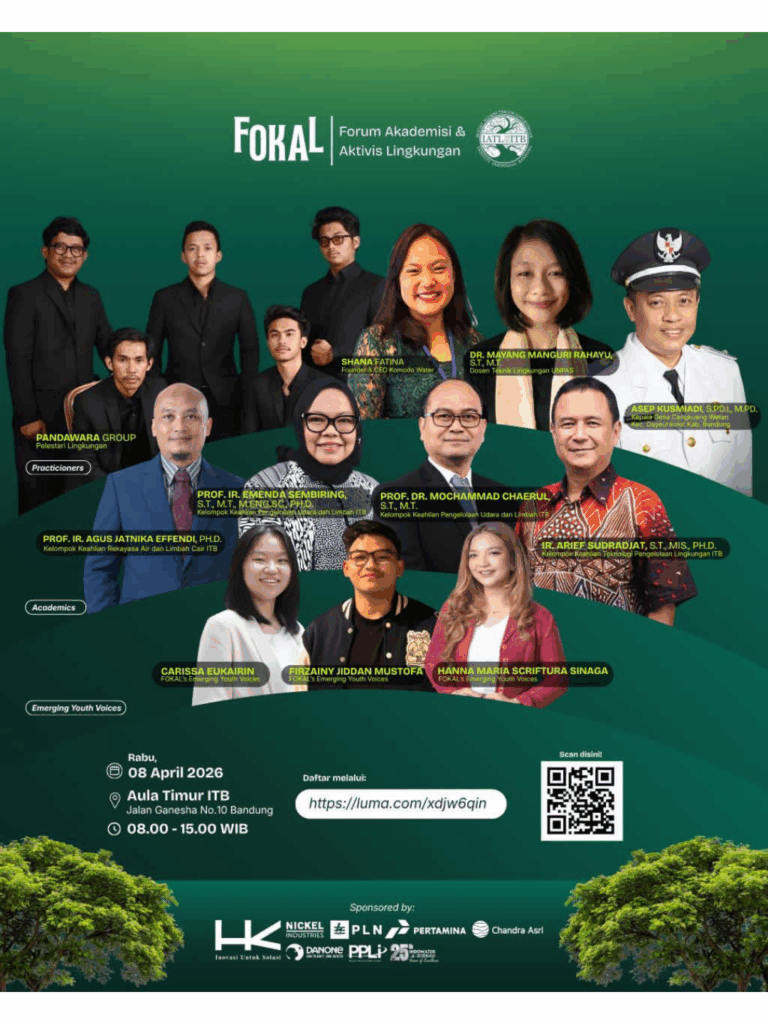
On Thursday, April 9, 2026, CEST attended the Forum of Academics and Environmental Activists (FOKAL) ITB, held at the East Hall of Institut Teknologi Bandung. The event was an organized by the Environmental Engineering Alumni Association of ITB under the theme “Waste, Water, and Climate: Where Knowledge Meets Collective Action.” One of the main highlights was a session featuring Carissa Eukairin, who presented new approaches to tackling sachet waste—an issue that can no longer be ignored. Beyond that session, however, CEST members gained valuable insights throughout the day.
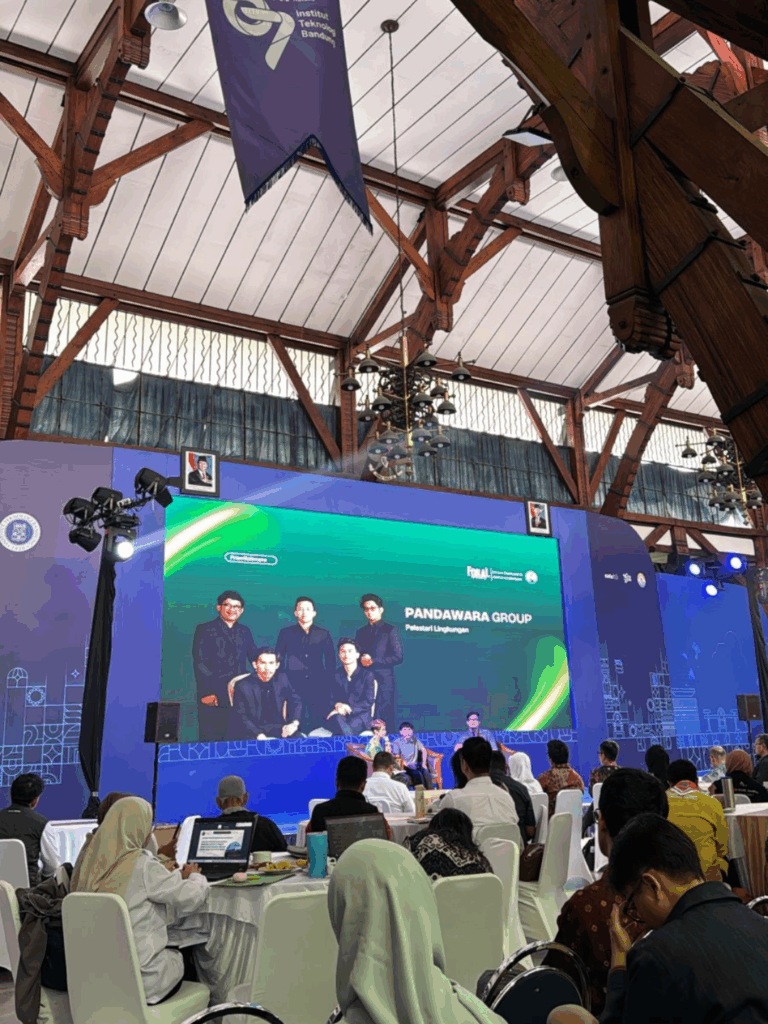
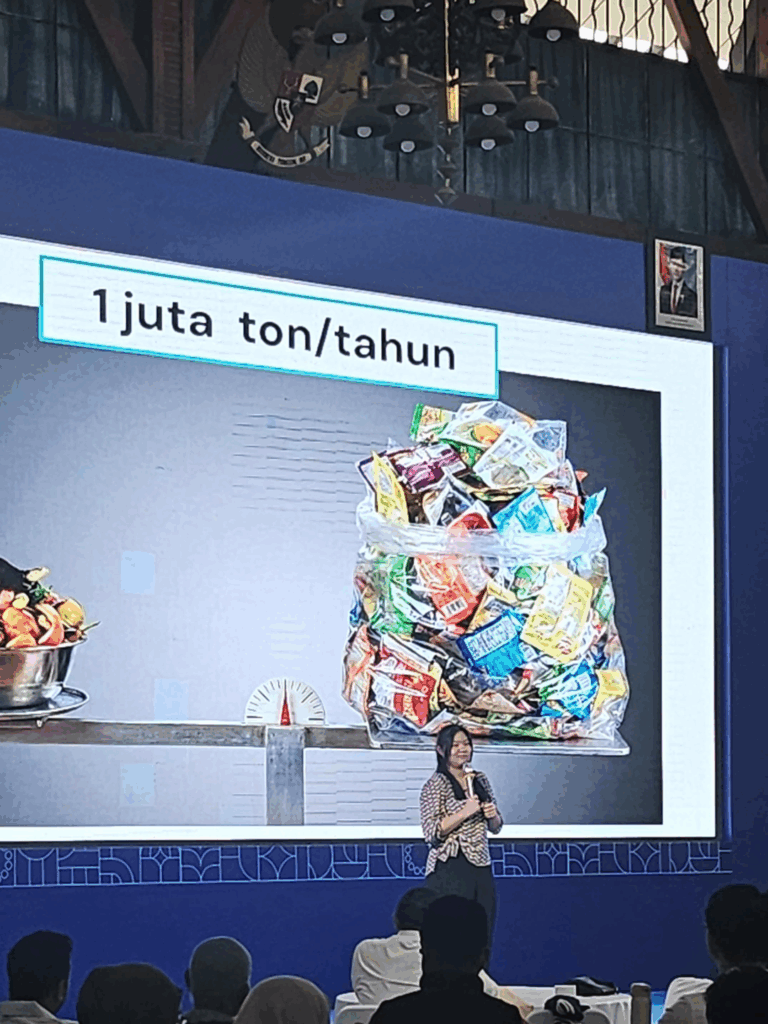
Today, when we talk about waste, we are no longer only discussing what to do after it is generated. Waste considerations must be integrated into industrial planning from the outset, including in the design of products that rely on single-use packaging. The concept of a circular economy was one of the key ideas emphasized during the forum. Yet, the question remains: to what extent have we actually begun to implement it?
“A great reminder that even advanced, widespread waste management technologies won’t matter much for a circular waste economy if there’s no demand,” said Fayza Ardani.
But what about the waste that is already piling up today?
“At this point, I tend to agree with the plan. Despite the risks, Indonesia needs a rapid solution to manage the already overwhelming volume of waste, while continuing to pursue long-term solutions,” said Prof. Emenda, an expert on circular economy waste Indonesia and lecturer the Faculty of Civil and Environmental Engineering ITB.
“Prof. Emenda’s presentation was particularly engaging because it used a flow diagram to map plastic waste in Indonesia. He also managed to estimate emissions from waste management across the country,” said Dinda Fauzani, Principal Researcher at CEST and an Environmental Engineering alumna of ITB, after briefly attending his presentation.
The CEST team was only able to attend for half a day, while the event continued into the afternoon with a range of additional sessions. It was an event that offered diverse perspectives and valuable insights on sustainable living. We look forward to future events from FOKAL!
 Bahasa Indonesia
  English