

We often hear about how brands and companies use psychology to influence people’s shopping habits. From supermarket layouts to social media ads, there’s a whole science behind getting people to choose one product over another. But what if we used those same principles to encourage something more important, like choosing safer and more climate-resilient water sources?
That’s the question behind a recent study that looks at how people make decisions about their drinking water. The research explores the links between gender, water security, and climate risks, and how these factors can help shape better communication strategies. The goal is simple: help governments, local water utilities (PDAMs), and other stakeholders encourage people to adopt safer, more reliable water services through evidence-based behavior change approaches.
Behaviour Change for Climate Resilience
To do this, the study used a method called Behavior-Centered Design (BCD), a framework specifically developed to understand and influence human behavior. Normally, BCD involves five stages, from understanding a problem to testing and scaling solutions. However, because of limited time and resources, the research focused only on the early stages: “Assess and Build” and “Create.” Rather than testing interventions in the field, the study developed a proposed behavior change package and a theory of change that could later be adopted and piloted by PDAMs or other institutions. This behaviour change package was co-developed by Universitas Indonesia and UTS-Institute for Sustainable Futures, including local government institutions.
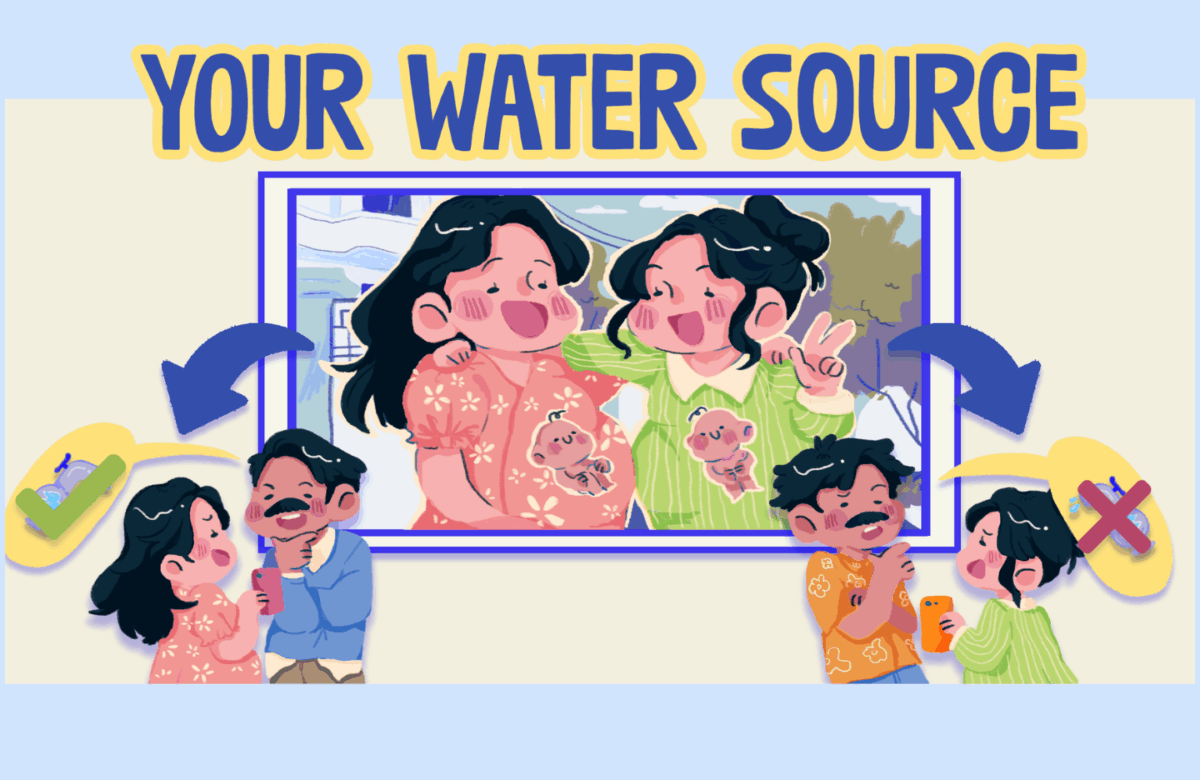
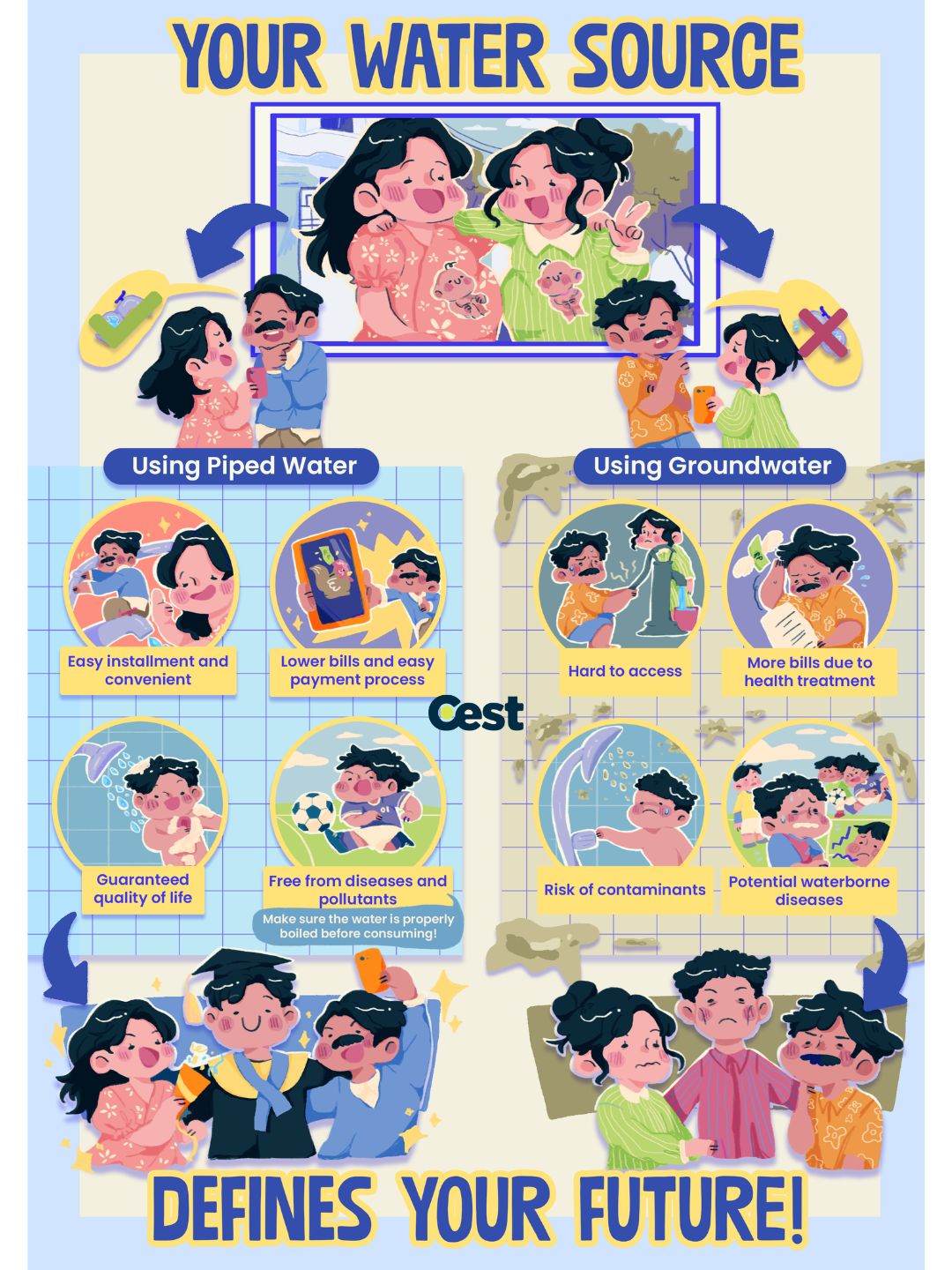
One of the outputs is a poster that follows two versions of a child’s life, shaped by a decision their family makes about safe drinking water. The poster is designed to show that choosing piped water is not just about convenience. It can help families reduce water-related costs, protect children from the health risks associated with poor water quality, and create better opportunities for the future. More importantly, the message taps into something deeply human: the desire to care for our families and give our children the best possible start in life.
Poster placement Behavior Change Communication (BCC) for Water Security
The poster was design to be optimally printed on a A2 size paper to be placed at strategic spots, amongst them are:
- Community Centers (Balai RW, Posyandu/Poswindu)
- Healthcare Facilities (Puskesmas)
- Schools
- Markets and Shops
- Places of Worship
- Public Transportation Hubs
- PDAM offices.
Also proposed, proposal distributed with partners such as:
- Health professionals (namely, the Ministry of Health and local health agencies)
- NGOs involved with water, sanitation and hygiene (WASH) programs in urban areas
The effort into influencing behaviour doesn’t stop with the poster. It is supported by a series of short videos that expand on the lives of these characters, reinforcing key motivations such as family wellbeing, social aspiration, safety, and success. By connecting safe water choices to everyday hopes and dreams, the campaign aims to make climate-resilient water services feel relevant, personal, and worth choosing.
For better print quality, please contact info@cest.or.id.
 Bahasa Indonesia
  English