

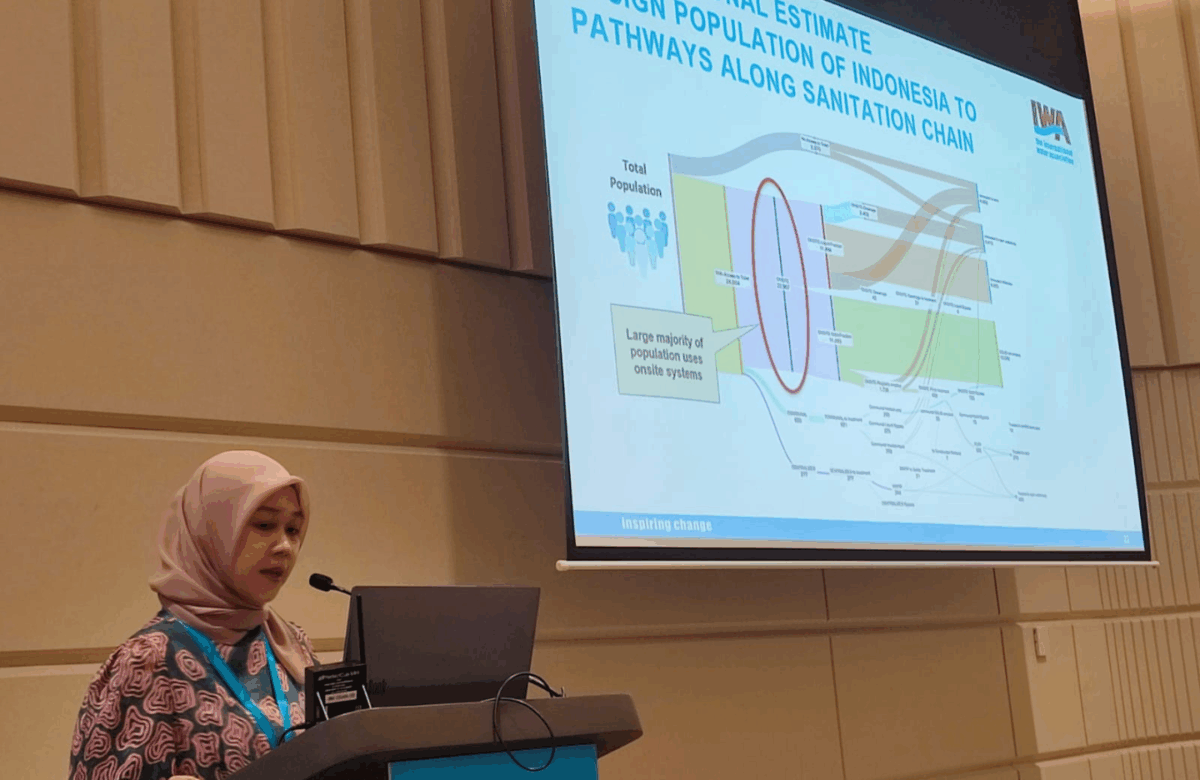
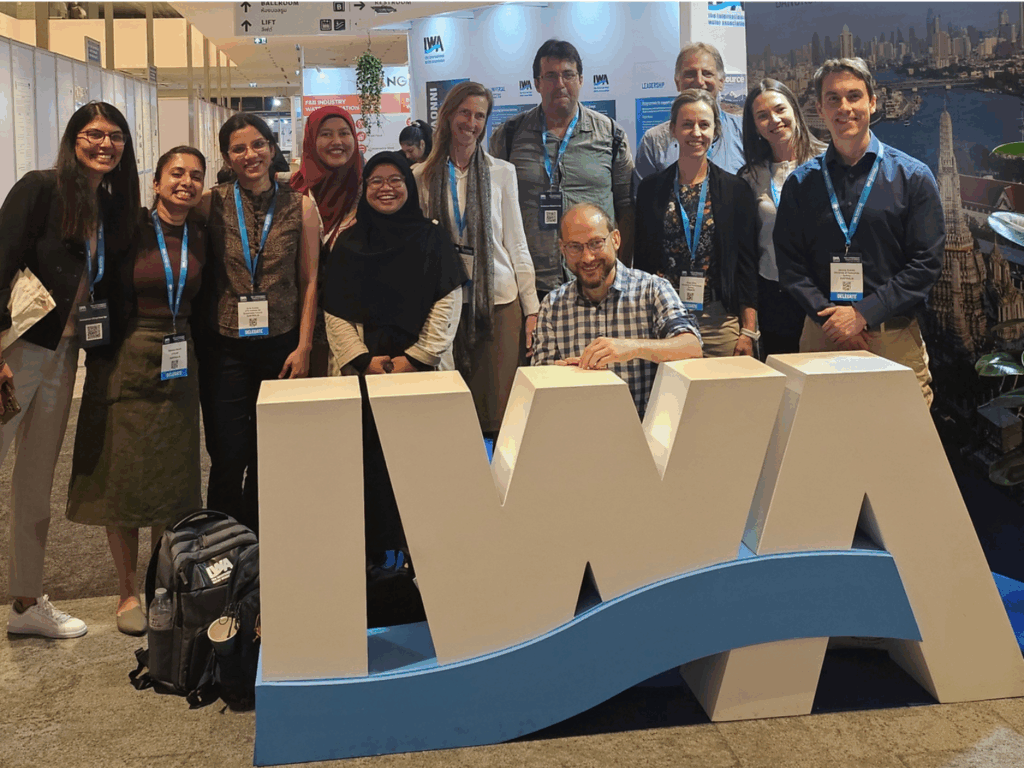
Attending the IWA Water and Development Conggress in Bangkok from December 8–11 was an eye-opening experience for me. I joined a delegation representing the EMISI (Emission Measurement to Improve Sanitation in Indonesia) project, supported by the Australia-Indonesia Partnership for Infrastructure (KIAT). EMISI is led by University of Technology Sydney (UTS) in collaboration with Universitas Indonesia (UI), Centre for Regulation, Policy and Governance (CRPG), and University of Leeds, with contributions from consultants at University of New South Wales (UNSW) and Institut Teknologi Bandung (ITB) during 2024–2026. What I initially expected to be an observational trip unexpectedly became an event where I actively participated in discussions on climate change, greenhouse gas emissions, and sustainable sanitation.
One of the key moments from the plenary sessions was Jay Bhagwan’s presentation, LOO AND BEHOLD!, which highlighted the urgent need for water-efficient and climate-resilient sanitation solutions. He introduced a closed-loop onsite sanitation treatment system that enables wastewater reuse and supports circular economy principles. While the concept was ambitious and innovative, I remained skeptical about the high energy demand required for membrane filtration and pressure systems. Still, the session reinforced the growing urgency of low-carbon sanitation technologies in addressing both water scarcity and climate adaptation. Undoubtedly, sounds like a great idea.
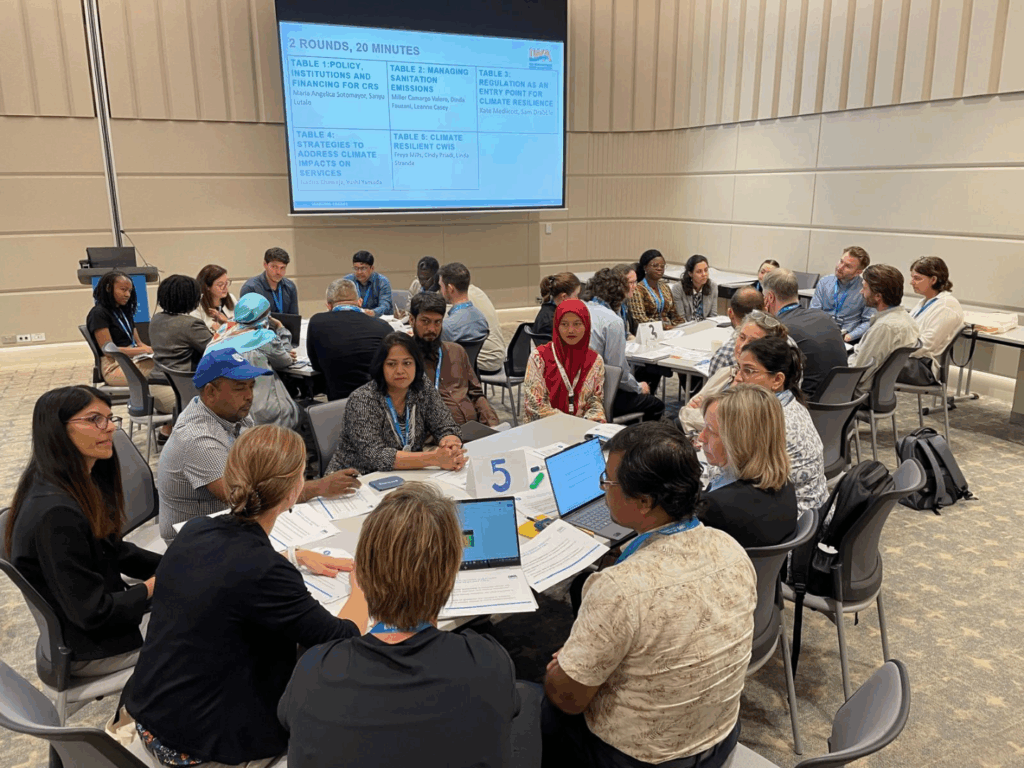
Another highly relevant session was Decarbonizing Wastewater and Sanitation: Emissions, Resilience, and Climate Action, which closely aligned with EMISI’s work on methane emissions and greenhouse gas inventories.
Linda Strande presented research on determining population equivalents for non-sewered sanitation systems, challenging long-standing assumptions used in the Intergovernmental Panel on Climate Change methodology. Current IPCC calculations rely heavily on generalized assumptions such as person equivalent (PE), biochemical oxygen demand (BOD), and methane correction factors (MCFs). These assumptions may significantly overestimate greenhouse gas emissions from sanitation systems and consequently lead to oversized wastewater treatment infrastructure. Linda proposed shifting from PE-based calculations toward actual user numbers and localized field measurements. Her findings echoed discussions from participants studying pit latrine compositions in Japan, where waste characteristics were found to vary daily and seasonally, making steady-state assumptions increasingly unreliable.
Kelsey Shaw presented a study on measuring, scaling, and reporting methane emissions from low-cost non-sewered sanitation systems. Her work strongly resonated with what we are doing in EMISI. Methane (CH₄), a potent greenhouse gas contributing significantly to global warming, remains poorly quantified in non-sewered sanitation systems despite these systems serving nearly 58% of the global population. Current IPCC guidelines depend on generalized methane correction factors and per-capita assumptions that may not reflect real conditions. Through field measurements conducted in Canada and Uganda, the study found that conventional indicators such as BOD and COD showed little correlation with methane emissions. Instead, practical onsite indicators, such as scum depth, proved to be stronger predictors. These findings support the need for evidence-based climate policies and more accurate national greenhouse gas inventories for the sanitation sector. An interesting technical takeaway was that gas samples remain stable for up to a year when properly stored with standard gases.
Similarly, Aasim Mansuri shared findings on evaluating methane emissions across the sanitation service chain in India. Like EMISI, his team developed custom-built flux chambers to measure emissions from onsite sanitation systems, sewer networks, pumping stations, and drainage channels. Their results demonstrated that methane emissions in India are also underestimated by existing IPCC default values. By conducting localized field measurements in cities across Maharashtra, including Vita, Ichalkaranji, and PCMC, the study developed city-level emission factors and a standardized methodology for greenhouse gas accounting. The research contributes to climate mitigation strategies, resource recovery opportunities, and the development of more accurate urban emissions inventories.
Another plenary session that left a lasting impression on me was The Momentum Moment: Safely Managed Sanitation at Scale by Roshan Shrestha. Representing the Bill & Melinda Gates Foundation, he discussed how sanitation investments can drive climate resilience, public health, and sustainable urban development. Dr. Shrestha has spent more than 35 years advancing non-sewered sanitation, fecal sludge management, and citywide inclusive sanitation across the Global South, particularly in India, Bangladesh, and Nepal. His presentation emphasized the importance of strengthening systems, scaling climate-resilient sanitation infrastructure, and building cross-sector partnerships to accelerate progress toward sustainable development goals.
I was also introduced to the concept of container-based sanitation (CBS) through a presentation by Alison Parker. CBS systems provide households with toilets equipped with removable containers that are collected and emptied regularly. What made this particularly compelling was the evidence showing that container-based sanitation systems are often more resilient to floods, droughts, fires, and civil unrest compared to conventional infrastructure. Case studies from Haiti, Kenya, Ghana, and Guatemala demonstrated how CBS can support climate adaptation efforts in vulnerable urban communities.
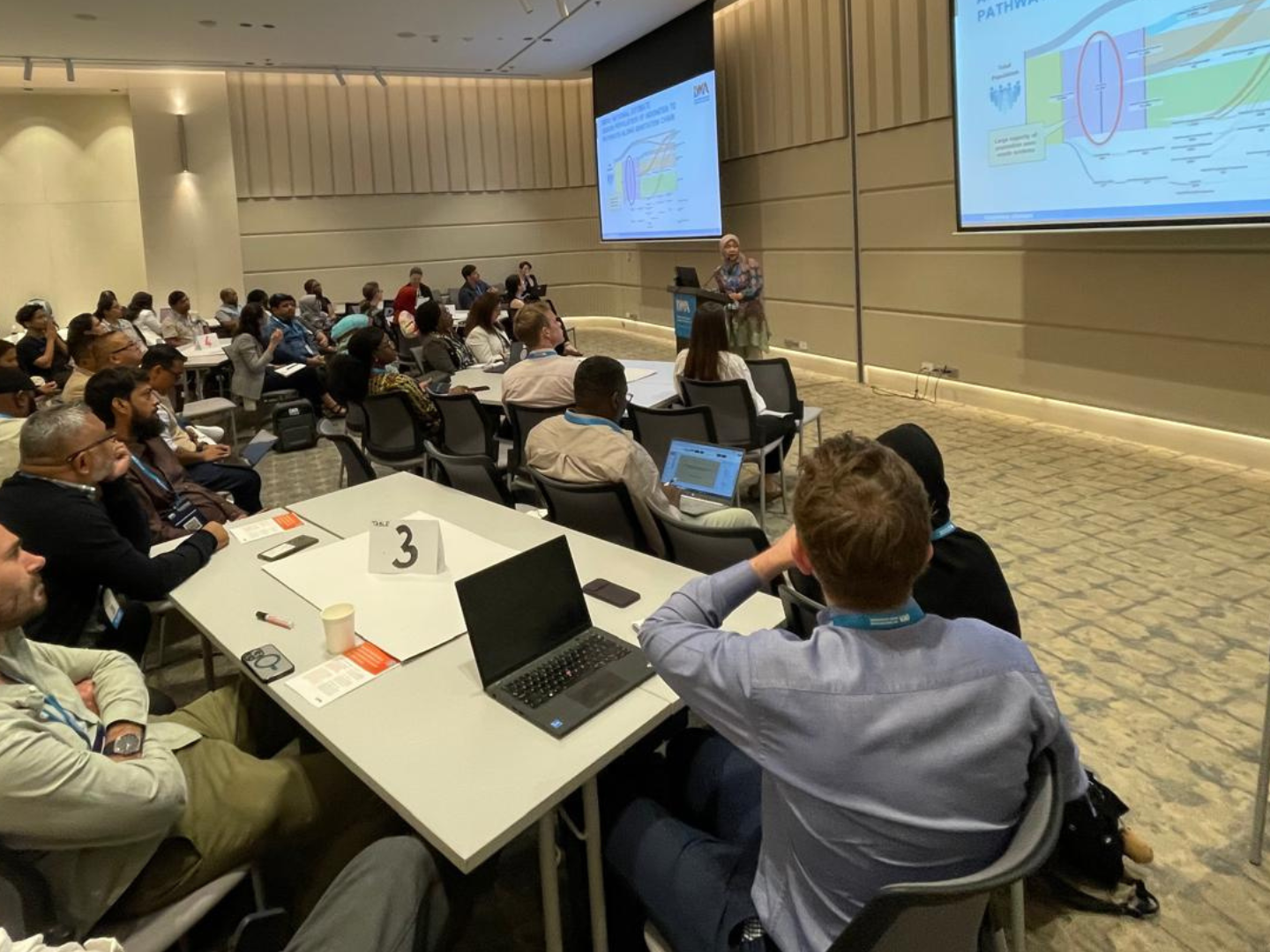
Without a doubt, the highlight of the congress for me was presenting at the workshop From Climate Vulnerability to Climate Resilience, organized by the Climate Resilient Sanitation Coalition. Although I only had one day to prepare for a three-minute lightning presentation, it became one of the most memorable experiences of the event. Together with Miller Alonso Camargo-Valero, I presented findings from EMISI that reflect Indonesia’s sanitation reality:
- 87% onsite sanitation systems
- 3% communal systems
- 1% centralized sewerage systems
- 9% open defecation
Our research suggests that Indonesia’s sanitation-related greenhouse gas emissions may be significantly higher than current government estimates based on IPCC default assumptions, similar to findings previously reported by UNICEF in Mozambique and Nigeria. Even if centralized wastewater treatment coverage expands to 12%, emissions may continue rising unless methane capture and climate mitigation technologies are implemented.
I returned home more motivated than ever. Indonesia’s sanitation landscape remains overwhelmingly onsite and decentralized, requiring practical, climate-resilient, and low-carbon solutions supported by robust emissions data. Accurate methane measurements and localized greenhouse gas inventories are essential for shaping effective climate policy, advancing sustainable sanitation systems, and supporting Indonesia’s pathway toward net-zero emissions. EMISI has the potential to become a foundation for Indonesia’s first comprehensive national sanitation emissions inventory.
A huge thank you to the KIAT team, our UTS partners, and everyone who made this incredible experience possible.
 Bahasa Indonesia
  English